Saturday, November 12, 2011

Food, Inc.

  • In Food, Inc., filmmaker Robert Kenner lifts the veil on our nation's food industry, exposing the highly mechanized underbelly that's been hidden from the American consumer with the consent of our government's regulatory agencies, USDA and FDA. Our nation's food supply is now controlled by a handful of corporations that often put profit ahead of consumer health, the livelihood of the American farm
Food, Inc. lifts the veil on our nation's food industry, exposing how our nation's food supply is now controlled by a handful of corporations that often put profit ahead of consumer health, the
livelihood of the American farmer, the safety of workers and our own environment. Food, Inc. reveals surprising and often shocking truths about what we eat, how it's produced and who we have become as a nation.

Q&A with Producer/Director Robert Kenner, Co-Producer/Fo! od Expert Eric Schlosser, Food Expert Michael Pollan and Producer Elise Pearlstein

How did this film initially come about?
Kenner: Eric Schlosser and I had been wanting to do a documentary version of his book, Fast Food Nation.  And, for one reason or another, it didn't happen. By the time Food, Inc. started to come together, we began talking and realized that all food has become like fast food, and all food is being created in the same manner as fast food.

How has fast food changed the food we buy at the supermarket?
Schlosser: The enormous buying power of the fast food industry helped to transform the entire food production system of the United States.  So even when you purchase food at the supermarket, you’re likely to be getting products that came from factories, feedlots and suppliers that emerged to serve the fast food chains.

How many years did it take to do this film and what wer! e the ch allenges?
Kenner: From when Eric and I began talking, about 6 or 7 years.  The film itself about 2 ½ years.  It has taken a lot longer than we expected because we were denied access to so many places.

Pearlstein: When Robby brought me into the project, he was adamant about wanting to hear all sides of the story, but it was nearly impossible to gain access onto industrial farms and into large food corporations.  They just would not let us in.  It felt like it would have been easier to penetrate the Pentagon than to get into a company that makes breakfast cereal.  The legal challenges on this film were also unique.  We found it necessary to consult with a first amendment lawyer throughout the entire filming process.

Who or what influenced your film?
Kenner: This film was really influenced by Eric Schlosser and Fast Food Nation, but then as we were progressing ! and had actually gotten funding, it became very influenced as well by Michael Pollan and his book Omnivore’s Dilemma. 

And then, as we went out into the world, we became really incredibly influenced by a lot of the farmers we met.

What was the most surprising thing you learned?
Kenner: As we set out to find out how our food was made, I think the thing that really became most shocking is when we were talking to a woman, Barbara Kowalcyk, who had lost her son to eating a hamburger with E. coli, and she’s now dedicated her life to trying to make the food system safer. It’s the only way she can recover from the loss of her child. But when I asked her what she eats, she told me she couldn't tell me because she would be sued if she answered.

Or we see Carol possibly losing her chicken farm … or we see Moe, a seed cleaner who’s just being sued for amounts that there’s no way he can pay, even thoug! h he’s not guilty of anything.  Then we realized there’s ! somethin g going on out there that supersedes foods. Our rights are being denied in ways that I had never imagined. And it was scary and shocking. And that was my biggest surprise.

So, what does our current industrialized food system say about our values as a nation?
Pollan:
It says we value cheap, fast and easy when it comes to food like so many other things, and we have lost any connection to where our food comes from.

Kenner: I met a cattle rancher and he said, you know, we used to be scared of the Soviet Union or we used to think we were so much better than the Soviet Union because we had many places to buy things.  And we had many choices.  We thought if we were ever taken over, we’d be dominated where we’d have to buy one thing from one company, and how that’s not the American way.  And he said you look around now, and there’s like one or two companies dominating everything in the food world. We’ve become what ! we were always terrified of.

And that just always haunted me â€" how could this happen in America?  It seems very un-American that we would be so dominated, and then so intimidated by the companies that are dominating this marketplace.

How has the revolving door relationship between giant food companies and Washington affected the food industry?
Pearlstein:
We discovered that the food industry has managed to shape a lot of laws in their favor.  For example, massive factory farms are not considered real factories, so they are exempt from emissions standards that other factories face.  A surprising degree of regulation is voluntary, not mandatory, which ends up favoring the industry. 

What have been the consequences for the American consumer?
Kenner:
Most American consumers think that we are being protected.  But that is not the case.  Right now the USDA does not have the authority to shut down a plant ! that is producing contaminated meat.  The FDA and the USDA ha! ve had t heir inspectors cut back.  And it’s for these companies now to self-police, and what we’ve found is, when there’s a financial interest involved, these companies would rather make the money and be sued than correct it.  Self-policing has really just been a miserable failure.  And I think that's been really quite harmful to the American consumer and to the American worker. 

Pearlstein: The food industry has succeeded in keeping some very important information about their products hidden from consumers.  It’s outrageous that genetically modified foods don’t need to be labeled.  Today more than 70% of processed foods in the supermarket are genetically modified and we have absolutely no way of knowing.  Whatever your position, you should have the right to make informed choices, and we don’t.  Now the FDA is contemplating whether or not to label meat and milk from cloned cows.  It seems very basic that consumers should have the right t! o know if they’re eating a cloned steak.

Is it possible to feed a nation of millions without this kind of industrialized processing?
Pollan:
Yes.  There are alternative ways of producing food that could improve Americans’ health.  Quality matters as much as quantity and yield is not the measure of a healthy food system.  Quantity improves a population’s health up to a point; after that, quality and diversity matters more.  And it’s wrong to assume that the industrialized food system is feeding everyone well or keeping the population healthy.  It’s failing on both counts.

There is a section of the film that reveals how illegal immigrants are the faceless workers that help to bring food to our tables.  Can you give us a profile of the average worker?
Schlosser:
The typical farm worker is a young, Latino male who does not speak English and earns about $10,000 a year.  The typical meatpacking worker ha! s a similar background but earns about twice that amount.  A ! very lar ge proportion of the nation’s farm workers and meatpackers are illegal immigrants.

Why are there so many Spanish-speaking workers?
Kenner:
The same thing that created obesity in this country, which is large productions of cheap corn, has put farmers out of work in foreign countries, whether it’s Mexico, Latin America or around the world.  And those farmers can no longer grow food and compete with the U.S.’ subsidized food.  So a lot of these farmers needed jobs and ended up coming into this country to work in our food production.

And they have been here for a number of years.  But what’s happened is that we’ve decided that it’s no longer in the best interests of this country to have them here.  But yet, these companies still need these people and they’re desperate, so they work out deals where they can have a few people arrested at a certain time so it doesn’t affect production. But it affects people’s lives.  And ! these people are being deported, put in jail and sent away, but yet, the companies can go on and it really doesn’t affect their assembly line.  And what happens is that they are replaced by other, desperate immigrant groups.

Could the American food industry exist without illegal immigrants?
Schlosser:
The food industry would not only survive, but it would have a much more stable workforce.  We would have much less rural poverty.  And the annual food bill of the typical American family would barely increase.  Doubling the hourly wage of every farm worker in this country might add $50 at most to a family’s annual food bill.

What are scientists doing to our food and is it about helping food companies’ bottom line or about feeding a growing population?
Schlosser:
Some scientists are trying to produce foods that are healthier, easier to grow, and better for the environment.  But most of the food scientists ar! e trying to create things that will taste good and can be made! cheaply without any regard to their social or environmental consequences.

I am not opposed to food science.  What matters is how that science is used … and for whose benefit.

Can a person eat a healthy diet from things they buy in the supermarket if they are not buying organic? If so, how?
Pollan:
Yes, the supermarkets still carry real food.  The key is to shop the perimeter of the store and stay out of the middle where most of the processed food lurks.

How are low-income families impacted at the supermarket?
Kenner:
Things are really stacked against low-income families in this country.  There is a definite desire of the food companies to sell more product to these people because they have less time, they’re working really hard and they have fewer hours in their day to cook.  And the fast food is very reasonably priced.  Coke is selling for less than water.  So when these things are happening, it’s easi! er for low-income families sometimes to just go in and have a quick meal if they don’t get home until 10 o’clock at night.  At the moment, our food is unfairly priced towards bad food.

And, in the same way that tobacco companies went after low-income people because they were heavy users, food companies are going after low-income people because they can market to them, they can make it look very appealing.

What can low-income families do to eat healthier?
Schlosser:
As much as possible, they can avoid cheap, processed foods and fast foods.  It’s possible to eat well and inexpensively.  But it takes more time and effort to do so, and that’s not easy when you’re working two jobs and trying to just to keep your head above water.  The sad thing is that these cheap foods are ultimately much more expensive when you factor in the costs of all the health problems that come later.

Pollan: It’s possible to ! eat healthy food on a budget but it takes a greater investment! of time .  If you are willing to cook and plan ahead, you can eat local, sustainable food on a budget.

If someone wanted to get involved and help change the system, what would you suggest they do?
Pearlstein:
I hope people will want to be more engaged in the process of eating and shopping for food.  We have learned that there are a lot of different fronts to fight on this one, and people can see what most resonates with them.  Maybe it’s really just “voting with their forks” â€" eating less meat, buying different food, buying from companies they feel good about, going to farmers markets.

People can try to find a CSA â€" community supported agriculture â€" where you buy a share in a farm and get local food all year.  That really helps support farmers and you get fresh, seasonal food.  On the local political level, people can work on food access issues, like getting more markets into low income communities, getting better lunch program! s in schools, trying to get sodas out of schools.  And on a national level, we’ve learned that reforming the Farm Bill would have a huge influence on our food system. It requires some education, but it is something we should care about.

What do you hope people take away from this film?
Schlosser:
I hope it opens their eyes.

Kenner: That things can change in this country. It changed against the big tobacco companies.  We have to influence the government and readjust these scales back into the interests of the consumer.  We did it before, and we can do it again.

Pollan: A deeper knowledge of where their food comes from and a sense of outrage over how their food is being produced and a sense of hope and possibility of the alternatives springing up around the country.  Food, Inc. is the most important and powerful film about our food system in a generation.

For most Americans, the ! ideal meal is fast, cheap, and tasty. Food, Inc. examin! es the c osts of putting value and convenience over nutrition and environmental impact. Director Robert Kenner explores the subject from all angles, talking to authors, advocates, farmers, and CEOs, like co-producer Eric Schlosser (Fast Food Nation), Michael Pollan (The Omnivore's Dilemma), Gary Hirschberg (Stonyfield Farms), and Barbara Kowalcyk, who's been lobbying for more rigorous standards since E. coli claimed the life of her two-year-old son. The filmmaker takes his camera into slaughterhouses and factory farms where chickens grow too fast to walk properly, cows eat feed pumped with toxic chemicals, and illegal immigrants risk life and limb to bring these products to market at an affordable cost. If eco-docs tends to preach to the converted, Kenner presents his findings in such an engaging fashion that Food, Inc. may well reach the very viewers who could benefit from it the most: harried workers who don't have the time or income to read every book and eat ! non-genetically modified produce every day. Though he covers some of the same ground as Super-Size Me and King Corn, Food Inc. presents a broader picture of the problem, and if Kenner takes an understandably tough stance on particular politicians and corporations, he's just as quick to praise those who are trying to be responsible--even Wal-Mart, which now carries organic products. That development may have more to do with economics than empathy, but the consumer still benefits, and every little bit counts. --Kathleen C. Fennessy

Appleseed Ex Machina [Blu-ray]

  • The next installment in the Appleseed franchise, Appleseed: Ex Machina,available on DVD! Produced by John Woo and Directed by Shinji Aramaki,and featuring next generation CG technology, Appleseed: Ex Machina isback bigger and badder! Based on the manga from reknown creator Shirow Masamune, in this movie,Deunan and Briareos are both partners and lovers. As members of ESWAT,the elite forces servi
APPLESEED - Blu-Ray MovieThe 2004 Appleseed feature is a reworking of the earlier video based on the manga by Masamune Shirow (Ghost in the Shell). In 2131, most of humanity has withdrawn to the glittering city of Olympus after a devastating war. When the curvaceous Deunan Knute comes to Olympus, she encounters her former comrade Briareos, now a cyborg, and the lovely android Hitomi. The fate of Hitomi, Olympus, and humanity rest on the lost "Appleseed" technology that Deunan's mother hel! ped to develop. A standard series of chases, mecha battles, and confrontations leads to a predictable ending. When the original Appleseedappeared in 1988, it felt like a summary of anime's past, while Akira pointed the way to the future. This new version feels like a mishmash of Ghost in the Shell, Akira, Jin-Roh, Evangelion, and other, more exciting works. The motion-capture CG is typically weightless, and the mecha look oddly squat. (Rated R: violence) --Charles SolomonEarth's last city, Olympus, rose from the ashes of a global war on the backs of Bioroids, artificial clones who make up half the city's population. Under the strict guidance of a supercomputer, humanity's last survivors enjoy an idyllic peace, but only on the surface Human terrorists within the military seek a return to power and clash with the government's ESWAT forces lead by the legendary soldier, Deunan Knute, and her boyfriend who is 7! 5% machine. Retrieving the Appleseed will end the conflict, ! and Deun an alone holds its secret. The outstanding feature film based on the manga by SHIROW Masamune (Ghost In the Shell), directed by Shinji ARAMAKI (Bubblegum Crisis), and produced by SORI (Ping Pong) features a soundtrack by Boom Boom Satelites, Paul Oakenfold, Basement Jaxx and more and will be available from TOFU records. The DVD will feature high quality video encoded directly from the HD master in 16:9 anamorphic widescreen with 5.1 English Dolby Digital and DTS audio as well as the original Japanese 2.0 stereo and 5.1 DTS Dolby Digital soundtracks! This DVD also features commentary from both the director and the producer!The 2004 Appleseed feature is a reworking of the earlier video based on the manga by Masamune Shirow (Ghost in the Shell). In 2131, most of humanity has withdrawn to the glittering city of Olympus after a devastating war. When the curvaceous Deunan Knute comes to Olympus, she encounters her former comrade Briareos, now a cyborg, and the lov! ely android Hitomi. The fate of Hitomi, Olympus, and humanity rest on the lost "Appleseed" technology that Deunan's mother helped to develop. A standard series of chases, mecha battles, and confrontations leads to a predictable ending. When the original Appleseedappeared in 1988, it felt like a summary of anime's past, while Akira pointed the way to the future. This new version feels like a mishmash of Ghost in the Shell, Akira, Jin-Roh, Evangelion, and other, more exciting works. The motion-capture CG is typically weightless, and the mecha look oddly squat. (Rated R: violence) --Charles SolomonThe next installment in the Appleseed franchise Appleseed: Ex Machinaavailable on DVD! Produced by John Woo and Directed by Shinji Aramakiand featuring next generation CG technology Appleseed: Ex Machina isback bigger and badder!Based on the manga from reknown creator Shirow Masamune in this movieDeunan and Briareos are b! oth partners and lovers. As members of ESWATthe elite forces s! erving O lympus they are deployed everywhere troublestrikes. The two fighters find their partnership tested in a new way bythe arrival of Tereus who uncannily resembles Briareos before thewartime injuries that led to his becoming a cyborg. At the same timeOlympus finds itself under a stealth attack . Cyborg terrorism deadlynanotech zealots and rioting citizens are just some of the threats thatDeunan must contend with as she fights to save Olympus.System Requirements:Running Time: 104 minutesFormat: BLU-RAY DISC Genre: SCI-FI/FANTASY/FANTASY Rating: PG-13 UPC: 085391200666 Manufacturer No: 120066Produced by John Woo and directed by Shinji Aramaki, Appleseed Ex Machina (2007) ranks as the most elaborate, stylish, and violent of the three adaptations of Masamune Shirow's manga. When it was released in 1988, the original Appleseed felt like a summary of anime's past, while Akira pointed the way to the future. The second Appleseed (2004), also directed by A! ramaki, was an unimpressive motion-capture CG feature that borrowed elements from other sci-fi anime. In this latest incarnation, Deunan, Briareos, and Tereus of the E.S.W.A.T. team are charged with preserving the peace of the city-state of Olympus, a hi-tech paradise on a largely ruined Earth. Screenwriters Kiyoto Takeuchi and Todd W. Russell have given the story a contemporary twist, adding attacks by "cyborg terrorists" and an effort by the ruler of Olympus to control a world-wide satellite surveillance system. When cyborgs and human launch coordinated attacks on the government headquarters in Olympus, Deunan, Briareos, and Tereus swing into action against a mysterious enemy. The plot has little in common with the earlier films: the Appleseed technology that was at the core of the story isn't even mentioned. The look, tone, and characters in Ex Machina recall Shirow's Ghost in the Shell, rather than the original Appleseed. Not surprisingly, the elabo! rately choreographed fight scenes reflect Woo's signature styl! e, with slo-mo martial-arts combat, close-ups of falling shells, dynamic camerawork, and all-out gun battles. But the weightless movements of the motion-capture characters and the limited rendering of the skin textures gives Appleseed Ex Machina the feel of an extremely elaborate computer game. Despite the limits of the mo-cap technology, Appleseed Ex Machina is a fast-past, take-no-prisoners cinematic adventure that will delight action-movie fans as well as anime lovers. (Rated PG-13: violence, violence against women, profanity, grotesque imagery, potentially offensive religious imagery.) --Charles Solomon

Brother CS6000i Sew Advance Sew Affordable 60-Stitch Computerized Free-Arm Sewing Machine

  • Free-arm computerized sewing machine; with 60 stitch functions, 7 styles of 1-step buttonholes, and variety of snap-on presser feet
  • Computerized stitch selection on LCD screen; with auto threading, tension control dial, and auto-set drop-in bobbin
  • 110-volt machine operated with either foot pedal or 1-touch button for start, stop, and reverse stitching; dual LED light
  • Accessories include wide table accessory for quilting and more; hard cover case protects in storage
  • Machine measures 9-3/4 inches wide by 9-3/5 inches deep by 12-1/2 inches high; limited 25-year warranty
This light weight computerized sewing machine is heavy on the features that you are looking for! The CS-6000i has 60 built in stitches including, utility, decorative, heirloom, quilting and 7 styles of one step auto-sizing buttonholes. Whether you sew for crafting, garment, home decoration, or qu! ilting; this machine has it all for you at an affordable price! The CS-6000i also includes a plastic fitted wide table to support your larger projects such as quilts.

Bonnie and Clyde (Two-Disc Special Edition)

  • Condition: New
  • Format: DVD
  • Closed-captioned; Color; DVD; Full Screen; Original recording remastered; Restored; Special Edition;
Depression-era drifters Clyde Barrow (Warren Beatty) and Bonnie Parker (Faye Dunaway) embark on a life of crime. They crave adventure â€" and each other. Nothing in film history has prepared us for the cascading violence to follow. We learn they can be hurt â€" and dread they can be killed. The vivid title-role performances get superb support from Michael J. Pollard, Gene Hackman and Estelle Parsons, 1967 Best Supporting Actress Academy AwardÃ' winner. Director Arthur Penn keeps the film’s tone tough but never cruel. It continually dazzles, especially in the work of cinematographer Burnett Guffey (winner of the film’s second OscarÃ') and editor Dede Allen. Generations later, it’s still a thunderous, thrilling ride. DISC 1: MOVIE Digitally Remast! ered for High-Impact Home Viewing Brilliance from Restored Original Film and Audio Elements • Theatrical Trailers Subtitles: English, Français & Korean (Main Feature. Bonus Material/Trailer May Not Be Subtitled.). DISC 2: SPECIAL FEATURES Additional Scenes • New 40th-Anniversary Commemorative Documentary in 3 Parts: Revolution! The Making of Bonnie and Clyde • The History ChannelÃ' Documentary Love and Death: The Story of Bonnie and Clyde • Warren Beatty Wardrobe Tests.One of the landmark films of the 1960s, Bonnie and Clyde changed the course of American cinema. Setting a milestone for screen violence that paved the way for Sam Peckinpah's The Wild Bunch, this exercise in mythologized biography should not be labeled as a bloodbath; as critic Pauline Kael wrote in her rave review, "it's the absence of sadism that throws the audience off balance." The film is more of a poetic ode to the Great Depression, starring the dream team of Warren Beatty and Fay! e Dunaway as the titular antiheroes, who barrel across the Sou! th and M idwest robbing banks with Clyde's brother Buck (Gene Hackman), Buck's frantic wife Blanche (Estelle Parsons), and their faithful accomplice C.W. Moss (the inimitable Michael J. Pollard). Bonnie and Clyde is an unforgettable classic that has lost none of its power since the 1967 release. --Jeff ShannonOne of the landmark films of the 1960s, Bonnie and Clyde changed the course of American cinema. Setting a milestone for screen violence that paved the way for Sam Peckinpah's The Wild Bunch, this exercise in mythologized biography should not be labeled as a bloodbath; as critic Pauline Kael wrote in her rave review, "it's the absence of sadism that throws the audience off balance." The film is more of a poetic ode to the Great Depression, starring the dream team of Warren Beatty and Faye Dunaway as the titular antiheroes, who barrel across the South and Midwest robbing banks with Clyde's brother Buck (Gene Hackman), Buck's frantic wife Blanche (Estell! e Parsons), and their faithful accomplice C.W. Moss (the inimitable Michael J. Pollard). Bonnie and Clyde is an unforgettable classic that has lost none of its power since the 1967 release. --Jeff Shannon

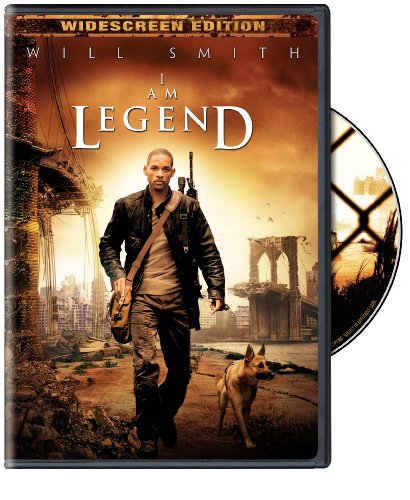
I Am Legend (Widescreen Single-Disc Edition)

  • Robert Neville is a brilliant scientist, but even he could not contain the terrible virus that was unstoppable, incurable, and man-made. Somehow immune, Neville is now the last human survivor in what is left of New York City and maybe the world. For three years, Neville has faithfully sent out daily radio messages, desperate to find any other survivors who might be out there. But he is not alone.
Academy Award® nominee Will Smith (Best Actor, The Pursuit of Happyness, 2006) stars in this action-packed comedy as Hancock, a sarcastic, hard-living and misunderstood superhero who has fallen out of favor with the public. When Hancock grudgingly agrees to an extreme makeover from idealistic publicist Ray Embrey (Jason Bateman, Juno), his life and reputation rise from the ashes and all seems right again--until he meets a woman (2003 Academy Award® winner Charlize Theron, Best Actress! , Monster) with similar powers to his and the key to his secret past.Hancock turns the standard superhero movie inside-out: The title character (Will Smith) can fly, has superstrength, and is invulnerable, but he's also a sloppy, alcoholic jerk who causes millions of dollars in property damage whenever he bothers to fight crime. When he saves the life of a public-relations agent named Ray (Jason Bateman, Arrested Development), Ray decides to improve Hancock's image--starting by having Hancock surrender himself to the authorities and go to prison for his lawless behavior. The idea is that once he's in prison, the crime rate will go up, and people will start to realize Hancock might be of value after all. This is only the first act of Hancock--from there, the movie takes several clever turns that shouldn't be revealed. Hancock isn't a great movie (among other things, director Peter Berg overuses close-ups with a hand-held camera to a degree ! that may cause motion sickness), but it is an extremely entert! aining o ne. The script, which holds together far better than most superhero movies, has a propulsive plot, good dialogue, some compassion for its characters, and even an actual idea or two. The spectacular action at least gestures towards obeying the laws of physics, which actually makes the special effects more vivid. The three leads (Smith, Bateman, and Charlize Theron as Ray's wife, Mary) deftly balance the movie's mixture of comedy, action, and drama. All in all, a smart subversive twist on a genre that all too often takes itself all too seriously. --Bret Fetzer

Stills from Hancock (click for larger image)


Academy Award® nominee Will Sm! ith (Best Actor, The Pursuit of Happyness, 2006) stars ! in this action-packed comedy as Hancock, a sarcastic, hard-living and misunderstood superhero who has fallen out of favor with the public. When Hancock grudgingly agrees to an extreme makeover from idealistic publicist Ray Embrey (Jason Bateman, Juno), his life and reputation rise from the ashes and all seems right again--until he meets a woman (2003 Academy Award® winner Charlize Theron, Best Actress, Monster) with similar powers to his and the key to his secret past.Hancock turns the standard superhero movie inside-out: The title character (Will Smith) can fly, has superstrength, and is invulnerable, but he's also a sloppy, alcoholic jerk who causes millions of dollars in property damage whenever he bothers to fight crime. When he saves the life of a public-relations agent named Ray (Jason Bateman, Arrested Development), Ray decides to improve Hancock's image--starting by having Hancock surrender himself to the authorities and go to prison for his lawl! ess behavior. The idea is that once he's in prison, the crime rate will go up, and people will start to realize Hancock might be of value after all. This is only the first act of Hancock--from there, the movie takes several clever turns that shouldn't be revealed. Hancock isn't a great movie (among other things, director Peter Berg overuses close-ups with a hand-held camera to a degree that may cause motion sickness), but it is an extremely entertaining one. The script, which holds together far better than most superhero movies, has a propulsive plot, good dialogue, some compassion for its characters, and even an actual idea or two. The spectacular action at least gestures towards obeying the laws of physics, which actually makes the special effects more vivid. The three leads (Smith, Bateman, and Charlize Theron as Ray's wife, Mary) deftly balance the movie's mixture of comedy, action, and drama. All in all, a smart subversive twist on a genre that all too of! ten takes itself all too seriously. --Bret Fetzer
Ac! ademy Aw ard® nominee Will Smith (Best Actor, The Pursuit of Happyness, 2006) stars in this action-packed comedy as Hancock, a sarcastic, hard-living and misunderstood superhero who has fallen out of favor with the public. When Hancock grudgingly agrees to an extreme makeover from idealistic publicist Ray Embrey (Jason Bateman, Juno), his life and reputation rise from the ashes and all seems right again--until he meets a woman (2003 Academy Award® winner Charlize Theron, Best Actress, Monster) with similar powers to his and the key to his secret past.Hancock turns the standard superhero movie inside-out: The title character (Will Smith) can fly, has superstrength, and is invulnerable, but he's also a sloppy, alcoholic jerk who causes millions of dollars in property damage whenever he bothers to fight crime. When he saves the life of a public-relations agent named Ray (Jason Bateman, Arrested Development), Ray decides to improve Hancock's image--st! arting by having Hancock surrender himself to the authorities and go to prison for his lawless behavior. The idea is that once he's in prison, the crime rate will go up, and people will start to realize Hancock might be of value after all. This is only the first act of Hancock--from there, the movie takes several clever turns that shouldn't be revealed. Hancock isn't a great movie (among other things, director Peter Berg overuses close-ups with a hand-held camera to a degree that may cause motion sickness), but it is an extremely entertaining one. The script, which holds together far better than most superhero movies, has a propulsive plot, good dialogue, some compassion for its characters, and even an actual idea or two. The spectacular action at least gestures towards obeying the laws of physics, which actually makes the special effects more vivid. The three leads (Smith, Bateman, and Charlize Theron as Ray's wife, Mary) deftly balance the movie's mixture of! comedy, action, and drama. All in all, a smart subversive twi! st on a genre that all too often takes itself all too seriously. --Bret Fetzer

Stills from Hancock (click for larger image)


Academy Award® nominee Will Smith (Best Actor, The Pursuit of Happyness, 2006) stars in this action-packed comedy as Hancock, a sarcastic, hard-living and misunderstood superhero who has fallen out of favor with the public. When Hancock grudgingly agrees to an extreme makeover from idealistic publicist Ray Embrey (Jason Bateman, Juno), his life and reputation rise from the ashes and all seems right again--until he meets a woman (2003 Academy Award® winner Charlize Theron, Best Actress, Monster) wi! th similar powers to his and the key to his secret past.Han! cock turns the standard superhero movie inside-out: The title character (Will Smith) can fly, has superstrength, and is invulnerable, but he's also a sloppy, alcoholic jerk who causes millions of dollars in property damage whenever he bothers to fight crime. When he saves the life of a public-relations agent named Ray (Jason Bateman, Arrested Development), Ray decides to improve Hancock's image--starting by having Hancock surrender himself to the authorities and go to prison for his lawless behavior. The idea is that once he's in prison, the crime rate will go up, and people will start to realize Hancock might be of value after all. This is only the first act of Hancock--from there, the movie takes several clever turns that shouldn't be revealed. Hancock isn't a great movie (among other things, director Peter Berg overuses close-ups with a hand-held camera to a degree that may cause motion sickness), but it is an extremely entertaining one. The script, which! holds together far better than most superhero movies, has a propulsive plot, good dialogue, some compassion for its characters, and even an actual idea or two. The spectacular action at least gestures towards obeying the laws of physics, which actually makes the special effects more vivid. The three leads (Smith, Bateman, and Charlize Theron as Ray's wife, Mary) deftly balance the movie's mixture of comedy, action, and drama. All in all, a smart subversive twist on a genre that all too often takes itself all too seriously. --Bret Fetzer

Stills from Hancock (click for larger image)


Studio: Sony Pictures Home Ent Release Date: 11/16/2010 Rating: Pg13Studio: Sony Pictures Home Ent Release Date: 10/05/! 2010Robert Neville is a brilliant scientist, but even he could not contain the terrible virus that was unstoppable, incurable, and man-made. Somehow immune, Neville is now the last human survivor in what is left of New York City and maybe the world. For three years, Neville has faithfully sent out daily radio messages, desperate to find any other survivors who might be out there. But he is not alone. Mutant victims of the plague -- The Infected -- lurk in the shadows... watching Neville's every move... waiting for him to make a fatal mistake. Perhaps mankind's last, best hope, Neville is driven by only one remaining mission: to find a way to reverse the effects of the virus using his own immune blood. But he knows he is outnumbered... and quickly running out of time.Will Smith stars in the third adaptation of Richard Matheson’s classic science-fiction novel about a lone human survivor in a post-apocalyptic world dominated by vampires. This new version somewhat alters Math! eson’s central hook, i.e., the startling idea that an ordina! ry man, Robert Neville, spends his days roaming a desolated city and his nights in a house sealed off from longtime neighbors who have become bloodsucking fiends. In the new film, Smith’s Neville is a military scientist charged with finding a cure for a virus that turns people into crazed, hairless, flesh-eating zombies. Failing to complete his work in time--and after enduring a personal tragedy--Neville finds himself alone in Manhattan, his natural immunity to the virus keeping him alive. With an expressive German shepherd his only companion, Neville is a hunter-gatherer in sunlight, hiding from the mutants at night in his Washington Square town house and methodically conducting experiments in his ceaseless quest to conquer the disease.

The film’s first half almost suggests that I Am Legend could be one of the finest movies of 2007. Director Francis Lawrence’s extraordinary, computer-generated images of a decaying New York City reveal weeds growing through the crack! s of familiar streets that are also overrun by deer and prowled by lions. It’s impossible not to be fascinated by such a realistically altered cityscape, reverting to a natural environment, through which Smith moves with a weirdly enviable freedom, offset by his wariness over whatever is lurking in the dark of bank vaults and parking garages. Lawrence and screenwriters Mark Protosevich and Akiva Goldsman wisely build suspense by withholding images of the monsters until a peak scene of horror well into the story. It must be said, however, that the computer-enhanced creatures don’t look half as interesting as they might have had the filmmakers adhered more to Matheson’s vampire-nightmare vision. I Am Legend is ultimately noteworthy for Smith’s remarkable performance as a man so lonely he talks to mannequins in the shops he frequents. The film’s latter half goes too far in portraying Smith’s Neville as a pitiable man with a messianic mission, but this lapse ! into bathos does nothing to take away from the visual and dram! atic acc omplishments of its first hour. --Tom Keogh

Anamorph

  • Academy Award®-nominee Willem Dafoe* (Spiderman, Platoon) is a detective drawn into a gruesome case in this intense psychological thriller. Haunted by the killings, he soon finds himself confronting his own deadly past. With each slaying, the investigation takes a different, darker turn. And the nearer he's drawn to the murders, the closer he could become the ultimate victim - or take the
Academy Award®-nominee Willem Dafoe* (Spiderman, Platoon) is a detective drawn into a gruesome case in this intense psychological thriller. Haunted by the killings, he soon finds himself confronting his own deadly past. With each slaying, the investigation takes a different, darker turn. And the nearer he's drawn to the murders, the closer he could become the ultimate victim - or take the fall for the crimes. Also starring Scott Speedman (The Strangers) and Clea Duvall ("Heroes").

Stills from Anamorph (Click for larger image) !


Harsh Times

  • (Action) Bale stars as an ex-Army Ranger who finds himself slipping back into his old life of petty crime and booze after a job offer from the LAPD evaporates. Honorable discharged, Homeland Security wants to recruit him for some special ops in Central America, but first he has to pass a urine test.which proves difficult. Film directorial debut for Ayer who has written such box office hits as TRA
(Action) Bale stars as an ex-Army Ranger who finds himself slipping back into his old life of petty crime and booze after a job offer from the LAPD evaporates. Honorable discharged, Homeland Security wants to recruit him for some special ops in Central America, but first he has to pass a urine test...which proves difficult. Film directorial debut for Ayer who has written such box office hits as TRAINING DAY, U-571 and THE FAST AND THE FURIOUSBleak as its South Central Los Angeles setting, Harsh T! imes is like a suicidal vortex swallowing men who ought to know better but can't stop their self-destruction. Christian Bale stars as Jim Davis, a stressed-out, former Army Ranger who becomes a very bad influence on his weak-willed buddy, Mike Alvarez (Freddy Rodriguez of Six Feet Under). Together the two meander through streets at night, getting drunk and stoned, finding trouble for its own sake and inviting danger as a ritual of machismo bonding. Mike's wife, Sylvia (Eva Longoria), a lawyer whom Mike, working as a telemarketer, put through school, is repelled by Jim and watches in pain as her spouse chooses a downward spiral over renewal and redemption with her. When Jim's application to join the L.A. police is turned down, he leads Mike into pure anarchy. An impractical change of fortune doesn't help any, and first-time director David Ayer, who wrote the screenplay for Harsh Times years before his script for Training Day, goes to some lengths, dr! amatically and visually, to convey Jim's unhinged condition. T! he drear iness of it all, and a sense that Bale has constructed--but not exactly lived in--another in his gallery of lost, misfit souls, makes it hard to connect with this film. Still, it is hard to turn away from these desperate and dangerous characters. --Tom Keogh

Boys of Baraka Poster Movie 11x17 Devon Brown Richard Keyser Justin Mackall Romesh Vance

  • Approx. Size: 11 x 17 Inches - 28cm x 44cm
  • Size is provided by the manufacturer and may not be exact
  • The Amazon image in this listing is a digital scan of the poster that you will receive
  • Boys of Baraka 11 x 17 Inches Style A Mini Poster
  • Packaged with care and shipped in sturdy reinforced packing material
Don't miss the true coming-of-age story that follows a group of extraordinary 12-year-old boys from the most violent ghettos of Baltimore to an experimental boarding school 10,000 miles away in rural Kenya. An emotionally explosive journey shot over three years, the film zeroes in on a group of brave kids who are willing to cross the ocean to chase an opportunity - boys with a fierce determination to fight the label of "throw-away."

This product is manufactured on demand using DVD-R recordable media. Amazon.com's standard return policy will apply.If everyone in high government office saw The Boys of Baraka, who knows what kind of positive change it might inspire? From this remarkable documentary about hope and second chances, the message is clear: The poorest, most violent, undesirable neighborhoods in America are a breeding ground for hopelessness and despair, and there's a solution if only we'd give it a good fighting chance. The scene is Baltimore, Maryland, in 2002, where 76% of all African American boys living in the inner-city ghetto will never earn a high school diploma. As one adult tells the kids at a Baltimore school, they have three choices: jail, an early death, or graduating high school--and you know she's telling the cold, hard truth. That's when we learn of the Baraka School in Kenya, East Africa, where 20 African American boys (ages 12 and 13) are chosen each year to enter a transformative two-year course of schooling, away from their families in Baltimore. The purpose of the school, in part,! is to demonstrate that the toxic environment of Baltimore, an! d its ne gative impact on the self-esteem of ghetto residents, can be reversed by removing these boys to Baraka, where a strict regimen of classes and responsibilities has an immediate, if not always permanent, beneficial effect.

We follow several boys on this fascinating journey toward growth and renewal. Devon is an aspiring preacher with musical talent; Montrey is a troublemaker with a bad attitude, who dreams of a career in science; brother Richard and Romesh are both accepted into Baraka, and despite setbacks both flourish in the program. Codirectors Heidi Ewing and Rachel Grady capture their gradual awakening to a new way of living and a new outlook on life, and then comes bad news: Due to security concerns and regional politics, the Baraka program is suspended, and the boys must return to the bleakness of Baltimore. Have they changed for good? Will they find a way to earn their diplomas and have hope for their futures? The Boys of Baraka offers no easy answers, but ! in showing us a glimmer of hope against all odds, the film gains depth and power with a conditional happy ending. Uncertainty remains, but so does a palpable sense of achievement and self-improvement that could, on a grander scale of government and societal support, lead to a positive revolution in our school system, which currently offers a depressing shortage of options for our most underprivileged citizens. Without forcing its uplifting message, this exceptional documentary offers proof of a better way, if only enough people would step up and support it. --Jeff ShannonIronweed Film Club. This DVD includes: Feature Film * One Short * Directors' commentary interactive menus and DVD extras. The Boys of Baraka Directed by Heidi Ewing and Rachel Grady * 2005 * 84 minutes. Ryan's Well Directed by Lalita Krishna * 2001 * 25 minutes. WINNER best documentary Chicago Int'l Film Festival 2005 WINNER best documentary Newport Int'l film festival 2005.Please note that the content of this book primarily consists of articles available from Wikipedia or other free sources online. The Boys of Baraka is a 2005 documentary film produced and directed by filmmakers Heidi Ewing and Rachel Grady (both of whom also made Jesus Camp in 2006). Twenty at-risk boys from Baltimore attend the seventh and eighth grades at a boarding school in Kenya. The documentary follows them in Kenya and in Baltimore, before and after attending the Baraka School in Kenya. It also mentions that 76% of African Americans in Baltimore do not graduate High School. Boys of Baraka reproduction Approx. Size: 11 x 17 Inches - 28cm x 44cm Style A mini poster print

Pop Culture Graphics, Inc is Amazon's largest source for movie and TV show memorabilia, posters and more: Offering tens of thousands of items to choose from. We also offer a full selection of framed posters..

Customer satisfaction i! s always guaranteed when you buy from Pop Culture Graphics,Inc

Twitter Delicious Facebook Digg Stumbleupon Favorites More


web log free